
The Flourishing Practice Framework: Building a Therapy Career That Doesn't Consume You
The False Choice
"Do I continue doing what I'm doing and burn out, or do I leave the field?"
If you're a therapist, counselor, or mental health professional, you've probably heard colleagues frame their future in exactly these terms. Maybe you've thought it yourself during a particularly exhausting week. Or month. Or year.
But what if this isn't actually the choice at all?
Helen, founder of Beacon of Hope and Brighter Beginnings by Kairos Counselings and the Somatic Integration Institute, faced this exact false dichotomy in 2019. What she discovered—and what we now teach other clinicians—is that there's a third option: building a practice that genuinely flourishes without consuming you in the process.
The Myth of "Successful" Burnout
Here's a sobering reality: At the Somatic Integration Institute, we regularly work with therapists making $150,000 to $300,000 annually who are completely depleted. From the outside, they've "made it." They have full practices, strong reputations, financial success.
But success measured by revenue alone is meaningless if you're:
- Dreading Sunday afternoons as Monday approaches
- Counting down the hours until vacation
- Feeling resentful toward clients you once cared deeply about
- Sacrificing your health, relationships, and joy
This is what Helen calls being consumed by your practice rather than being sustained by it. And it's far more common than anyone admits.
The Seven Elements of the Somatic Leverage System
Through recovery from burnout and work supporting hundreds of clinicians, the Somatic Integration Institute developed what we call the Somatic Leverage System. This comprehensive framework has seven core elements, each addressing a different dimension of practice building while applying somatic principles to business decisions.
Element 1: Embodied Foundation & Radical Boundary Setting
The word "boundary" gets thrown around constantly in therapy circles, but Helen takes it to a practical level. True boundaries aren't just about saying no to new clients or limiting your caseload. They're about:
Time Architecture - Building actual space between sessions. Not five minutes. Real space. Enough time to complete the between-session protocol, use the restroom, drink water, and arrive fully present for the next client.
Energetic Boundaries - Actively releasing what doesn't belong to you. This isn't passive or wishful thinking—it's an intentional practice of identifying and visualizing the release of client material you're carrying.
Home-Work Separation - Creating rituals that mark the end of your workday. This might be a specific somatic practice, a physical transition like changing clothes, or a sensory marker like lighting a candle at home that signals "work is over."
Foundation 2: Strategic Resourcing
This element redesigns the structure of your practice—services, schedule, income streams—all configured to support your nervous system rather than strain it. Burnout prevention isn't about occasionally taking a bubble bath or going on vacation (though those are nice). It's about daily, consistent resourcing that rebuilds your capacity.
The Practice Energy Audit - We developed a tool that helps clinicians identify where their energy is leaking. Most therapists, after completing this audit, immediately reclaim about five hours per week. Five hours. That's not about working harder or being more efficient—it's about identifying and eliminating energy drains you've normalized.
Supervision Beyond Licensing - Having regular supervision or consultation isn't just for early-career therapists. We emphasize that even after 40 years in the field, clinicians benefit from having a professional to consult with. This creates a container for processing difficult cases, prevents isolation, and provides accountability for self-care.
Community Connection - The Catalyst Collective and similar programs recognize that sustainable practice isn't built in isolation. Having a community of peers who understand the unique challenges of this work provides normalization, support, and collective wisdom.
Element 3: Regulated Systems & Processes & Somatic Integration
This element transforms the operational side of your practice. Because the best services won't sustain you if your systems are chaos, and even simple processes can be designed for regulation or dysregulation. Your body isn't just the vehicle that carries your brain to sessions. It's an intelligent system that holds information, responds to stress, and requires attention.
Nervous System Awareness - Learning to recognize your own dysregulation is foundational. Are you in hypervigilance? Shutdown? Somewhere in between? You can't regulate what you can't recognize.
Grounding Practices - These aren't abstract concepts but concrete actions: feeling your feet on the floor, noticing your environment, engaging your senses. These practices literally shift your nervous system state.
Movement Integration - Between sessions, your body needs to move. Not exercise (unless you want to), but simple, spontaneous movement that allows held energy to release.
Element 4: Aligned Marketing & Visibility and Financial Sustainability
This element reimagines how you connect with those you serve and build financial sustainability. Finding marketing channels that fit your nervous system, communicating authentically, building visibility without depletion—all while creating genuine financial stability.
Here's the uncomfortable truth: financial stress is its own form of burnout accelerator. If you're worried about money while trying to maintain boundaries and self-care, you're fighting an uphill battle.
Our framework explicitly addresses revenue capacity—not from a place of greed, but from a place of practical sustainability. When you have:
- Clear boundaries (Element 1)
- Adequate resources (Element 2)
- Nervous system regulation (Element 3)
You're actually in a better position to serve more clients effectively or to raise your rates appropriately. Financial stability removes a major stressor and gives you choices about how you structure your practice.
Element 5: Sustainable Team Building
This element addresses whether and how to add people—both in your practice and in your life. This includes the often-overlooked support beyond your practice: the house cleaning, meal services, and life infrastructure that creates the margin everything else depends on. It also addresses the critical legal and financial decisions around hiring clinical staff, and helps you distinguish between what you should do yourself and what you should delegate based on your actual strengths and capacity.
Element 6: Regulated Leadership
This element explores what it means to lead from regulation rather than reactivity. It distinguishes between leadership, management, visionary work, and implementation—recognizing that you don't have to be good at all of these roles, you just need to know your strengths and build complementary support around you. Creating psychological safety, holding complexity, developing the leader you're becoming.
Element 7: Evolutionary Growth & Burnout Prevention
This element looks at the long arc—how practices and clinicians evolve over time, navigating transitions, finding the right size, building a support ecosystem for the journey. You can't address what you don't measure. Our burnout assessment helps clinicians objectively evaluate where they are on the burnout spectrum. Because here's the thing: if you wait until you're canceling clients to nap on your office couch, you've waited too long.
Early warning signs include:
- Thinking about clients outside of session time
- Difficulty transitioning from work to home
- Irritability with loved ones
- Loss of enthusiasm for work you once loved
- Physical symptoms like fatigue, headaches, or digestive issues
- Hypervigilance in your personal life
The Integration Challenge
Understanding these foundations is one thing. Implementing them is another.
We've identified a particular challenge for women in helping professions: they may find it easier to ask for help, but harder to actually accept and implement it. The tendency to deprioritize their own needs, to continue putting everyone else first, can sabotage recovery efforts.
This chronic suppression doesn't just cause emotional burnout—it manifests physically. Women disproportionately experience autoimmune disorders, and the correlation with chronic stress and nervous system dysregulation is significant.
The framework requires not just intellectual understanding but embodied commitment. You have to actually do the practices, implement the boundaries, and prioritize your resources—even when (especially when) it feels selfish or difficult.
The ROI of Self-Care
When Helen talks about return on investment, she's not just referring to financial returns (though those improve). She's talking about:
Restored Passion - Rediscovering why you entered this field in the first place Better Clinical Outcomes - When you're resourced, your clients get the best of you Longevity - Building a career that sustains for decades, not just years Life Quality - Actually enjoying your life outside of work Modeling Health - Showing clients what sustainable professional practice looks like
Getting Five Hours Back: The Quick Win
One of our most popular tools is the practice energy audit that returns approximately five hours to clinicians within a week of implementation. This isn't about working less—it's about identifying where energy leaks are happening:
- Unnecessary administrative tasks
- Poor session scheduling
- Lack of breaks
- Technology inefficiencies
- Failure to delegate
- Over-preparation or over-processing
Most clinicians have normalized these drains to the point of invisibility. The audit makes them visible and addressable.
The Living in Your Body Challenge
We offer a deceptively simple challenge that encapsulates the entire framework: "Spend more time living in your body."
Not thinking about your body. Not analyzing it, judging it, or trying to optimize it. Simply inhabiting it.
For just a few seconds or a minute, pause and:
- Feel your breath
- Notice sensations
- Sense your body's position in space
- Register temperature, pressure, comfort, or discomfort
This isn't a break from your work as a therapist. This IS the work. Because if you can't be present in your own body, you can't be fully present for anyone else.
The Path Forward
Building a flourishing practice doesn't happen overnight. The journey from the edge of burnout to creating programs that support other clinicians takes time, commitment, and willingness to fundamentally restructure relationships with work.
But it's absolutely possible. And the alternative—continuing down the path of unsustainable success or leaving a field that needs good clinicians—is too costly.
The question isn't whether you can afford to prioritize your wellbeing. The question is whether you can afford not to.
Because here's what we've discovered and now teach others: when you build a practice that truly flourishes, everybody wins. You win. Your clients win. Your family wins. The field wins.
Taking the First Step
If you're recognizing yourself in this framework, start with one thing:
Today, implement the between-session protocol. Two minutes between each client to stand, ground, look around, listen, and release what isn't yours.
That's it. One practice. Two minutes.
Not because it will solve everything, but because it will prove something crucial: change is possible. Recovery is real. A flourishing practice isn't a fantasy—it's a choice you make, one small practice at a time.
The work of helping others is sacred and necessary. But it cannot require your destruction. A truly flourishing practice recognizes this truth: the helper must also be helped. The healer must also heal. And the giver must also receive.
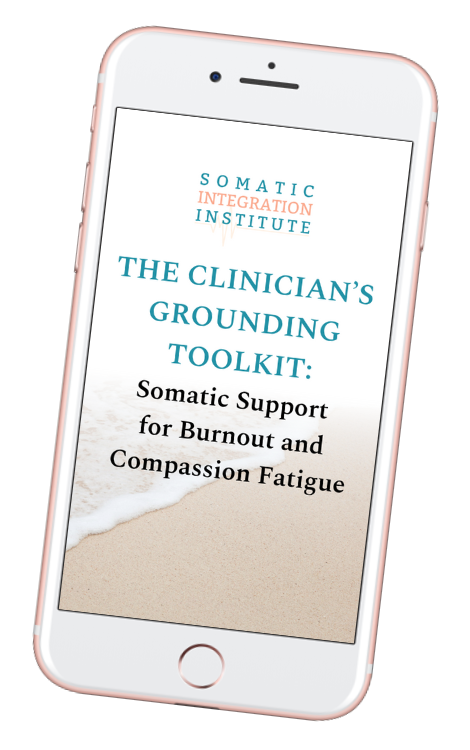
Ready to start building your flourishing practice? We're offering exclusive access to our complete framework, including a burnout assessment, practice energy audit, and three comprehensive webinar videos on boundaries, resourcing, and revenue capacity at flourishingsystem.org/smartperformance