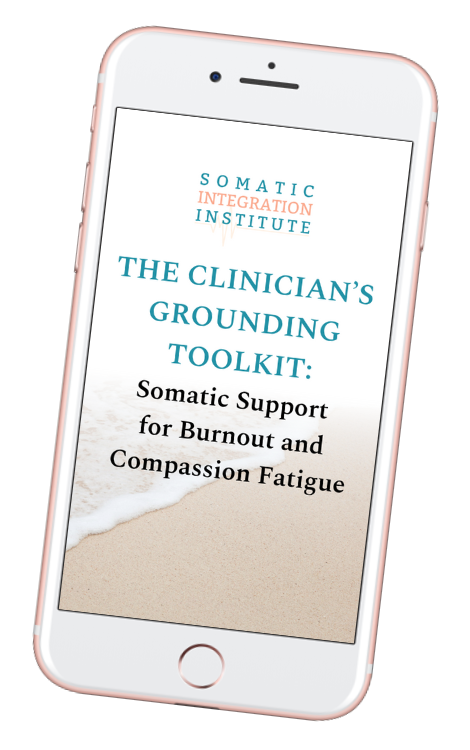

The Somatic Solution: How Body-Based Therapy Saved One Therapist's Career
When Your Body Knows Before Your Mind
Picture your brain as a storage device filled with photographs. Every client session, every trauma story, every emotional exchange adds another image to your mental hard drive. Eventually, that cache gets full. And when there's no more room, the next thing you encounter can cause real, lasting damage.
This is exactly what happened to Helen, a trauma therapist and founder of Beacon of Hope and Brighter Beginnings by Kairos Counselings, who found herself on the edge of leaving a profession she loved. But instead of quitting, she discovered something that would not only save her career but transform how the Somatic Integration Institute helps other clinicians: somatic therapy.
What Exactly Is Somatic Therapy?
Somatic therapy is a body-centered approach that recognizes our nervous system holds experiences and trauma that talk therapy alone can't always reach. While traditional therapy works primarily through cognitive processing and verbal dialogue, somatic work engages directly with the body's physiological responses to stress and trauma.
For therapists and healthcare professionals who spend their days helping others process difficult experiences, somatic approaches offer a critical tool: the ability to recognize when you're dysregulated and implement strategies to return to regulation.
The Accidental Discovery
Helen didn't initially seek out somatic therapy for herself. She began training in somatic experiencing because her trauma clients struggled with being in their bodies and integrating their experiences at a nervous system level.
"But as I was going through the training, as I was learning and practicing, I realized I am benefiting from this," Helen explains. "This is what brought me back from the brink."
The revelation was profound: while trying to become a better therapist for her clients, she stumbled upon the exact medicine she needed for her own healing.
Understanding Nervous System Dysregulation
When we're constantly exposed to others' trauma and distress, our nervous system can become chronically activated. We shift into hypervigilance—that state of being perpetually on alert. Helen recognized this in her own life:
- Waking up with clients' stories in her mind
- Unable to stop thinking about clients while cooking dinner
- Becoming increasingly irritable with her partner and children
- Losing patience she once had in abundance
These weren't character flaws or signs she wasn't "cut out" for the work. These were symptoms of a dysregulated nervous system crying out for attention.
The Power of Embodiment
One of Helen's most powerful insights is deceptively simple: "We need to spend more time living in our bodies. We are human beings, not human doings."
In helping professions, we're trained to be in our heads—analyzing, problem-solving, strategizing. We become so focused on cognitive processing that we disconnect from the wealth of information our bodies are constantly providing.
Your body knows you're overwhelmed before your mind admits it. Your body registers the impact of vicarious trauma before you consciously recognize it. Your body tries to tell you when it's time to rest, but we've learned to override those signals in service of productivity.
Practical Somatic Tools for Daily Practice
At the Somatic Integration Institute, we share several accessible somatic strategies that any clinician can implement:
1. The Grounding Practice
Between sessions, stand up and feel your feet on the floor. Not metaphorically—literally feel the pressure, temperature, and stability. This simple act pulls you out of your head and back into your body, creating a physiological reset.
2. Environmental Connection
Allow your eyes to wander around your space. Even if you've seen your office ten thousand times, truly look at it again. Let your ears "wander" to find sounds in the distance. This engages your orienting response—a fundamental nervous system function that helps you feel safe and present.
3. The Visualization Release
After identifying what you're carrying that doesn't belong to you (a client's story, an image, an emotion), visualize taking it out of your body. Some people imagine brushing it off. Others see themselves placing it in a box. Some open a window and let it float away. The specific method matters less than the intentional act of recognition and release.
4. Movement Integration
Your body needs to move to process and release held energy. This doesn't require a full workout—even standing up and allowing spontaneous movement for 30 seconds can create significant shifts.
Beyond Individual Practice: The Role of Community
While somatic tools are powerful, we emphasize that healing from burnout isn't a solo journey. We recommend:
Professional Supervision - Regardless of licensure level or years of experience, every clinician benefits from regular consultation. If you can't find local resources, organizations like the Somatic Integration Institute offer remote supervision.
Peer Connection - Speaking openly with other therapists about burnout struggles creates normalization and reduces isolation. The shame that often accompanies burnout thrives in secrecy.
Structured Programs - The Catalyst Collective was developed specifically to provide community-based support for nervous system health and sustainable practice building.
The Business Case for Somatic Self-Care
Here's something that often gets overlooked in burnout discussions: taking care of your nervous system isn't just about feeling better—it's about building a more successful practice.
When you're regulated and resourced, you:
- Make better clinical decisions
- Maintain clearer boundaries
- Have capacity for more clients (if desired)
- Experience greater satisfaction and longevity in your career
- Model healthy professional sustainability for your clients
Our framework doesn't just address burnout—it helps clinicians improve their boundaries, enhance their resources, and increase their revenue capacity. Because financial stress is its own form of burnout fuel.
The Warning Signs Revisited
Through a somatic lens, burnout symptoms take on new meaning:
- Napping between sessions = Your body desperately seeking regulation through shutdown
- Ruminating about clients = Nervous system unable to release and reset
- Irritability at home = Fight response redirected toward safe targets
- Loss of patience = Depleted regulatory capacity
- Physical symptoms = Body's increasingly urgent communication attempts
These aren't failures. They're information. They're your body's intelligent response to an unsustainable situation.
From the Brink to Flourishing
The journey from near-burnout to creating thriving programs that support other clinicians illustrates a profound truth: the skills we need to heal ourselves often become our greatest gifts to others.
The experience with somatic therapy didn't just save careers—it deepened the work. Practitioners return to their work with renewed passion, clearer boundaries, and practical tools they can offer both clients and colleagues.
An Invitation to Embodiment
If you're reading this and recognizing yourself in this story, consider this your invitation. Not to do more, add more, or achieve more—but to simply inhabit yourself more fully.
Right now, as you read these words, can you feel your breath moving in and out? Can you sense your body's contact with the surface beneath you? Can you notice three sounds in your environment?
This is embodiment. This is the beginning. This is your nervous system getting the attention it's been asking for.
Your body has been trying to help you all along. Maybe it's time to listen.
Somatic therapy offers more than techniques—it offers a fundamentally different relationship with yourself and your work. In a profession built on deep listening, perhaps the most radical act is learning to listen to yourself.